
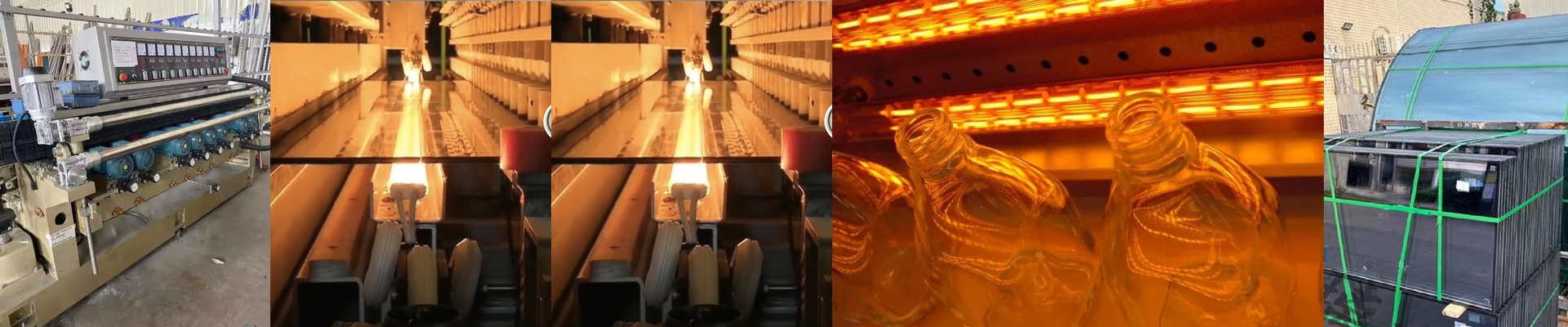
Out on the line, the ink is still wet and the schedule doesn’t wait. Convection ovens eat up cycle time, and the whole machine runs hot—more cooling, more maintenance, and more scrap from thermal stress. We built our NIR drying modules for exactly that reality, where a lost minute repeats every shift. What matters under the hood We match short-wave NIR emitters to the absorption profile of digital inks and coatings, dumping energy where the print needs it without driving heat deep into the substrate. Peak power hits the target, and the thermal profile stays shallow. That gives you a fast cure window with minimal temperature gradient across the glass, so stress fractures and warp risk fall off. The module drops into standard conveyor widths as a bank, with clean electrical terminations and straightforward shielding for operator safety. And we measure energy draw at the process level, not the room level, so you can track kWh per part. Why it plays in glass processing Digital printing on glass needs speed, but not at the expense of yield. NIR cures the printed layer quickly, so you can cut dwell time and push line speed. Because you’re not soaking the glass surface, post-process handling is safer—no lingering hot spots to complicate tempering or bending. The cured film comes out with consistent adhesion and color stability, and the process repeats with tight tolerance batch after batch. In high-volume glass work, that means fewer rejects, less rework, and output you can count on. The practical details NIR works best when your inks and coatings have the right spectral absorption. Some formulations cure too fast on the surface and trap solvents. Run a pilot with your exact material, and lock in emitter density and conveyor speed for uniformity. Keep the emitter-to-glass distance fixed—any drift changes intensity and can give you uneven cure. Once the setup is dialed, the module has fewer moving parts than oven-based systems, but alignment and reflector cleanliness still need to stay on the preventive maintenance schedule.