
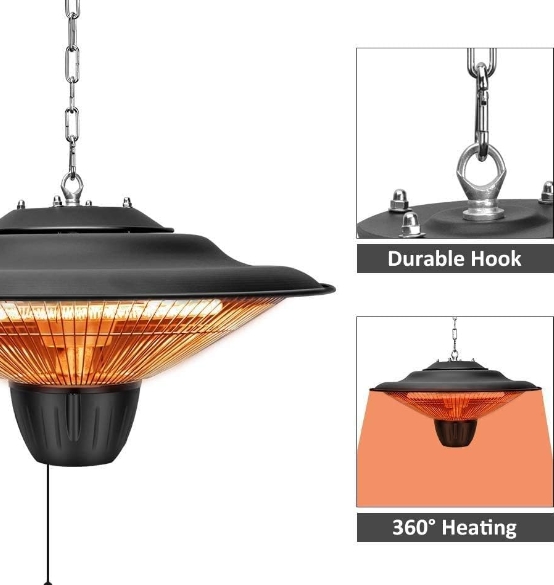
Out on the road, a cold night doesn’t care if your generator is taking its time warming up. In an RV, space and amps are always tight, and a standard convection heater can feel sluggish and hard on power. That’s why a compact infrared heater with a touch screen makes sense—instant radiant heat, control that’s right at your fingertips, and a footprint that fits the way you live.
What matters under the hood
We built this electric heater around a carbon fiber infrared element because it heats up fast and delivers even, draft-free warmth. It pulls 1200W on high and 600W on low, so you can match output to your battery or shore power without tripping a 15A circuit. The bright touch screen keeps temperature selection, timer, and mode switching in one place—no fumbling around for buttons in the dark. A built-in thermostat holds your set comfort level. Tip-over protection and an overheat sensor shut the unit down if it’s knocked over or airflow gets blocked. The IP34 rating keeps it protected against dust and splashes, so it can handle covered outdoor spots and the damp that always finds its way into camp life.
Why it fits RV and off-grid use
RV and off-grid setups live and die by two limits: kilowatt-hours and square inches. Infrared warmth goes straight to the point, heating people and objects directly instead of trying to warm all the air. You feel comfortable faster, and the compressor or generator doesn’t have to run as long. The compact profile and carrying handle let you put heat where you need it—by the dinette, beside the bed, or near the entry door. With the touch screen, you can pre-heat before bed, run a low setting overnight, and wake up without that jolt of full power.
Practical details you’ll want to keep straight
This heater is designed for 120V AC and should be plugged into a dedicated outlet when you can. It’s an indoor-rated unit with IP34 protection, so keep it under cover and out of direct rain. Clearances matter. Give it at least three feet from combustibles, and make sure the air path stays unobstructed so the sensors can do their job. In very cold conditions, start on high to warm surfaces quickly, then drop to low to keep things comfortable without draining your power.