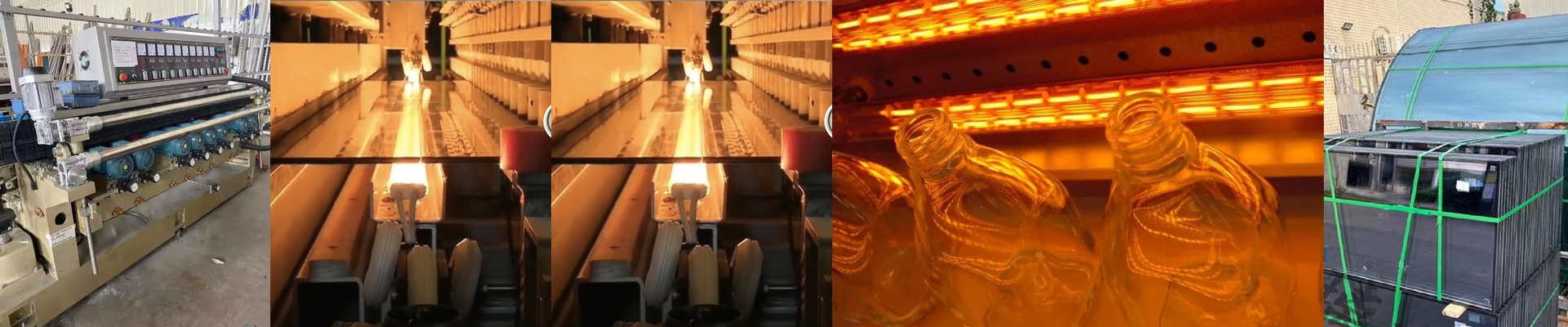

On the shop floor, heat is process control, not just temperature. If the heating profile drifts, you’ll see uneven tempering, shaky bending, and stress fractures that show up as optical distortion or spontaneous breakage. The wrong IR source makes all that worse—hot spots, slow response, and inconsistent coupling to the glass’s emissivity. What matters, technically We run short-wave quartz IR lamps because they throw rapid, direct radiation with fast ramp-up and tight power density. That lets you match the thermal response of low-emissivity coatings without cooking the substrate. Filament geometry and reflector layout are set up to deliver a more uniform thermal field, which matters when you’re on annealing and stress relief cycles—gradient control is what sets edge compression and overall strength. They come in standard industrial voltages and compact lengths, and drop straight into existing heating modules. Terminations are built to survive repeated thermal cycling. Why this works on the line In tempering and bending, cycle time is the hard limit. Faster heating shrinks the soak window and pushes throughput up, while stable output cuts scrap from thermal shock and warpage. For insulating glass sealing, controlled heat keeps edge integrity intact during the secondary seal, so sealant cure doesn’t wander. In lamination, the IR profile gives you even preheat across the interlayer before pressure engages, which cuts bubbles and improves optical clarity. The payoff is fewer reworks, curvature you can count on, and less energy per part. Here’s what to watch IR heating is line-of-sight, so fixture alignment and standoff distance need to be fixed and repeatable. A small change in gap can shift power density enough to leave visible bands. Make sure the lamp matches your controller’s response and that reflectors are in good shape—aging reflectors kill uniformity. Also double-check compatibility with your OEM bracket, wiring, and cooling airflow. A perfect lamp can still turn into downtime if the interface doesn’t fit.